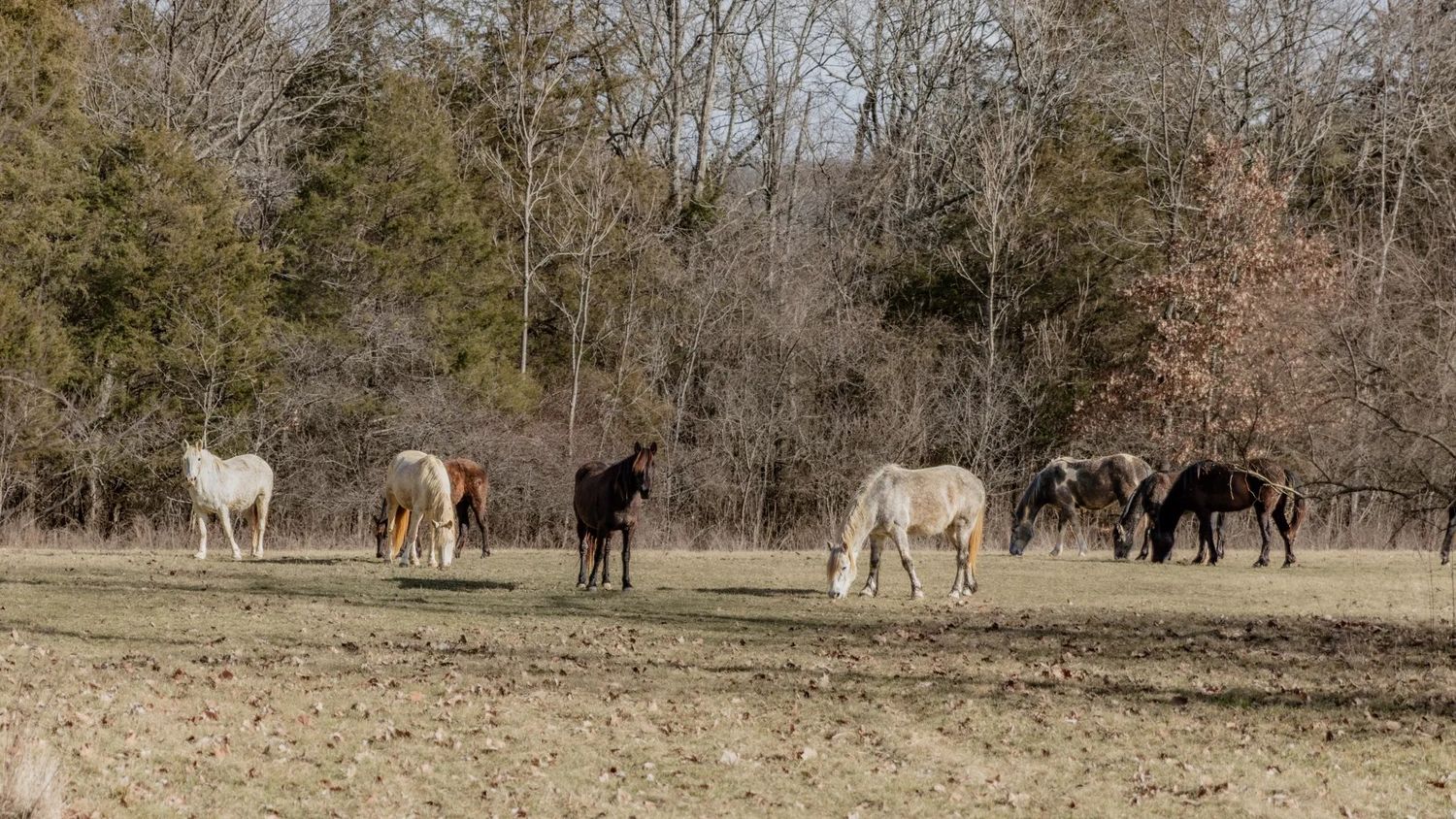
Winter isn’t especially long here in Missouri—not by most standards, anyway. But when you’re someone who thrives in the sunshine, who feels joy come alive with longer days and blooming things, every winter feels just a little too long.
By the time late February through early April roll around, I often find myself in that annual emotional slump—the skies are still gray, the wind still bites, and the vibrancy of summer feels like a memory. It gets harder to hold on to joy. I start counting the days until it feels warm again.
And then, like a whisper of hope, the dogwoods begin to bloom.
To me, dogwoods are the official kickoff of spring. They’re not just another flower on the seasonal timeline; they are the sign that winter is finally retreating. Their white blossoms stand out against the still-bare trees around them, like glitter in the woods. They feel like an announcement that the cold has been overcome. That more light is on its way. That joy is coming back.
But dogwoods don’t just brighten the season, they stir something in me. Every year when I see the first bloom, I feel a quiet reminder that what feels like death doesn’t stay that way. And that reminder connects beautifully with the truth in Ephesians 2:1–13.
“You Were Dead…”
“And you were dead in your trespasses and sins in which you once walked…” — Ephesians 2:1
That verse doesn’t sugarcoat it. There’s no warming up to the point. Paul jumps straight in: you were dead. Not sick. Not struggling. Not confused. Dead.
That’s what sin does to us. It strips away vitality. It numbs us. It cuts us off from the source of life. Like trees in winter, we may still be standing upright, but there’s no fruit. No bloom. No growth. And if we’re honest, there are times in life—spiritually and emotionally—where we feel like those bare trees: existing, but not living.
That’s where the gospel begins: not with how good we are, but with how much we need life breathed back into us.
And then come the blossoms.
Thriving in the Shade
One of the lesser-known facts about dogwood trees is that they thrive in the shade. They don’t demand center stage. They don’t need to soak up constant sunlight to bloom. In fact, they often flourish under the canopy of other trees, quietly doing their thing without fanfare.
That resonates with me deeply.
Some seasons of life feel shady—not in the scandalous sense, but in the covered-over, quiet, unseen sense. Times when no one notices your effort. When your growth feels slow. When your impact feels invisible.
But dogwoods show up there. And they show off the goodness of God there.
God doesn’t need perfect conditions to bring life out of you. His grace isn’t dependent on your spotlight. You don’t have to be loud to be faithful. You don’t have to be seen by everyone to be used by Him. Sometimes the most breathtaking growth happens in shaded places.
And maybe that’s the point.
“But God…”
“But God, being rich in mercy, because of the great love with which he loved us… made us alive together with Christ…” — Ephesians 2:4–5
I love that shift. It’s not about what we did to save ourselves. It’s God’s mercy. It’s His great love. It’s His initiative.
And that love doesn’t just make us feel better or help us cope with life. It brings us back to life. From dead to alive. From winter to spring. From barren to blooming.
The dogwood reminds us of that mercy every single year. Its branches, which looked so dry and lifeless, suddenly give birth to these delicate blooms. Nothing changed externally—it’s still chilly, the forest is still gray, but life has started again anyway. That’s what grace looks like.
Grace doesn’t wait for ideal circumstances. It thrives in places that look unworthy.
Beauty Without Boasting
Dogwoods are beautiful, but modest. They’re not the biggest blooms. They’re not the flashiest. They don’t steal the show the way tulips or roses might. But there is something uniquely soft and strong about them.
That’s what grace often looks like. Quiet. Consistent. Stunning in its simplicity.
It mirrors what Paul writes later in this same passage:
“For by grace you have been saved through faith. And this is not your own doing; it is the gift of God, not a result of works, so that no one may boast.” — Ephesians 2:8–9
We don’t bloom to show off. We bloom to reflect the love and mercy of the One who made us alive again. Grace doesn’t need a pedestal. It just needs room to grow. Like the dogwood, its beauty is real whether anyone is watching or not.
“But Now in Christ Jesus…”
“But now in Christ Jesus you who once were far off have been brought near by the blood of Christ.” — Ephesians 2:13
This verse is the crescendo of the passage. It’s the full bloom. The final thaw. The dogwood in all its glory.
Those of us who felt distant from God—whether by circumstance, shame, rebellion, or just numbness—have been brought near. Not by effort. Not by worthiness. But by the blood of Jesus.
That’s the gospel. And it is as breathtaking as a sudden bloom after a long, cold stretch.
When you see a dogwood, remember this: the cold is not forever. The separation is not forever. The barren season is not the end.
And that applies to so much more than just winter.
It applies to depression. It applies to grief. It applies to burnout. It applies to loneliness. It applies to dry seasons of faith where prayer feels pointless and Scripture feels silent.
In Christ, there is always the promise of spring.
One More Thing…
I often reflect on how God uses simple things to teach eternal truths. A flower. A breeze. A river. A sunrise. And yes, a tree that dares to bloom in the shade.
If you find yourself in a shaded season—unnoticed, weary, waiting for something to bloom—take heart. You were never meant to force fruit out of your own strength. You were never meant to stay in winter forever.
Let the dogwoods remind you:
There is life after the bitter. There is hope even in the shadows. And there is grace that comes quietly, but transforms everything it touches.
You may feel dead, but you are not. You may feel distant, but He is drawing near. You may feel barren, but you are being prepared to bloom.