There are places that make you lower your voice without anyone asking you to.
Boze Mill Spring is one of them.
Not because it is quiet exactly. It has its own kind of noise. The spring moves. The birds fuss in the trees. Bugs skim across the water like they have somewhere important to be. Leaves shift and whisper overhead. Somewhere off in the woods, something small snaps a twig and then pretends it didn’t. But even with all that, there is a stillness there that settles over you. It feels like walking into a room where something holy has been left behind.
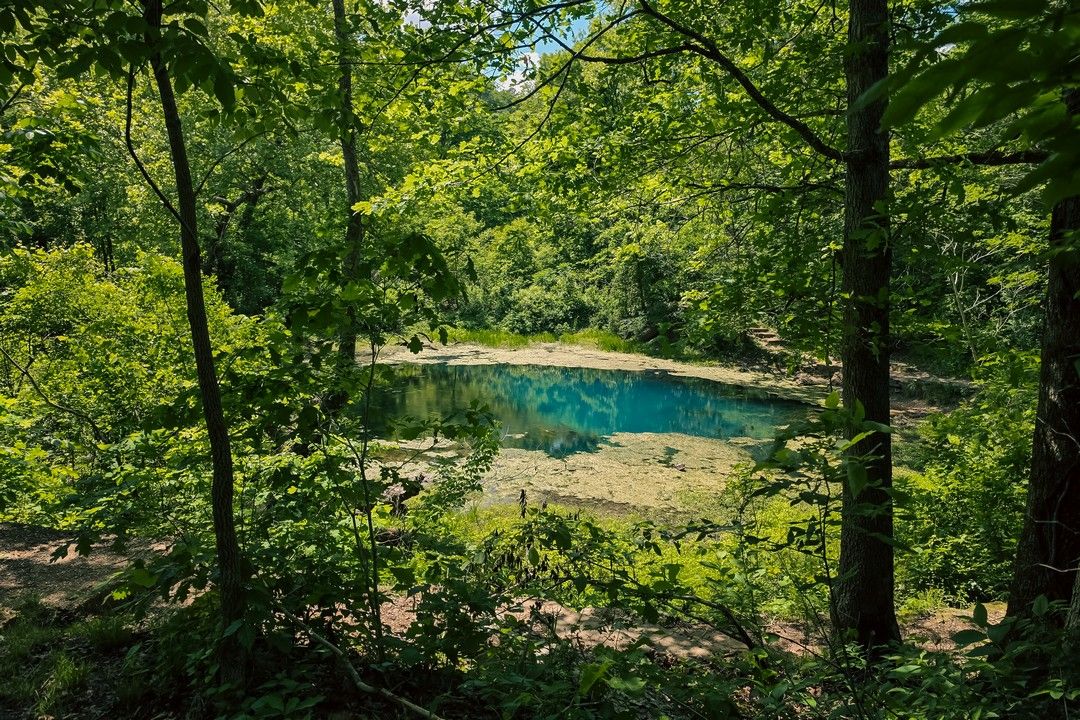
The water is the first thing that gets you.
It doesn’t look real at first. That deep blue-green color sits there like a piece of sky got tired of being above you and decided to rest in the ground. The spring holds the trees in its reflection so clearly that, for a second, it is hard to tell where the woods end and the water begins. Clouds drift across the surface. Branches stretch down into it. The whole place seems doubled, like God made it once in earth and once again in water.
And then, if you look across the spring toward the far bank, you see the tree.
Or what is left of it.
It would be easy to miss if you were only looking for pretty things. That is the trick of places like this. They are beautiful enough that you can walk right past the sermon. You can stare at the clear water, the green shade, the light dancing across the spring, and never notice the old giant lying there on the edge like a fallen king.
But once you see it, you can’t unsee it.
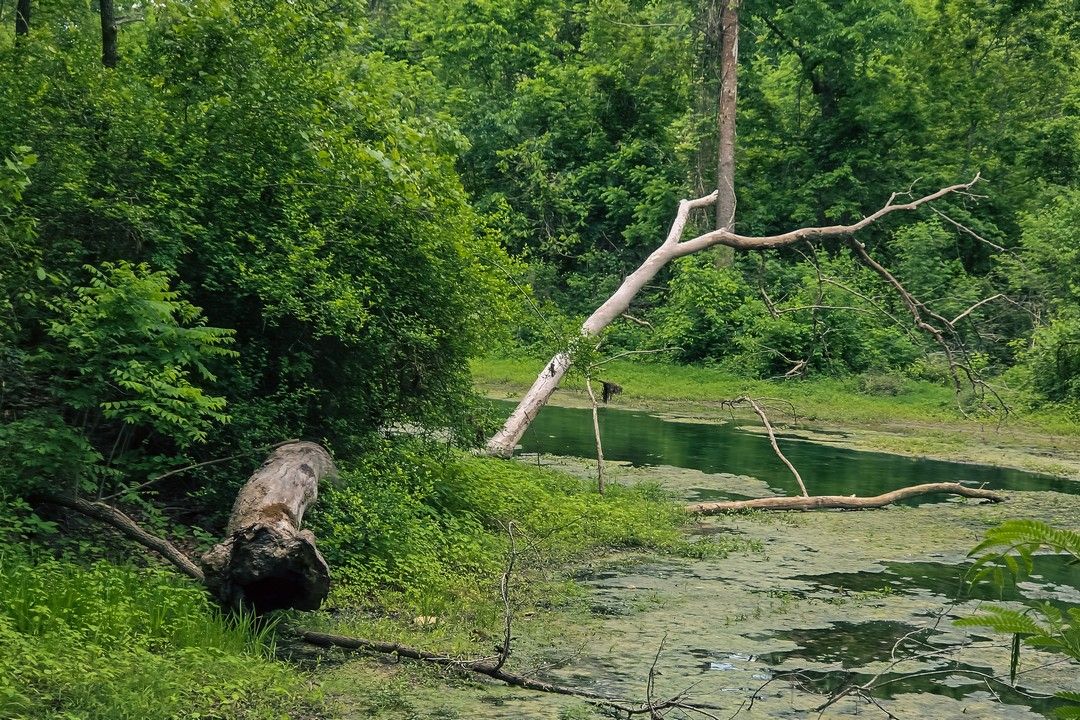
That tree must have been enormous. The trunk is still there, thick and heavy, as big around as a small car. Even broken, even fallen, even stripped of whatever height it used to have, it still looks powerful. There is a weight to it. A history. You can tell it did not start as some little background tree. It was the tree. The one that stood above the others. The one that caught the eye. The one that probably held the eagles when they came to the spring.
I can picture them there.
High up in those branches, white heads bright against the green, watching the water below. Eagles do not choose flimsy places to rest. They want a perch that can hold them. They used to be my neighbors, I know a thing or two about them. They want something steady. Something above the mess. Something with a wide view and deep roots. And that old tree looks like it would have been exactly that. A lookout. A shelter. A marker in the landscape. The kind of tree you measure other trees against.
Then something happened.
Wind maybe. Age maybe. Too much rain softening the ground. One storm too many. Maybe it happened in one violent crack that echoed through the spring. Maybe it took years of weakening before the final fall. We do not always get to know what brought a thing down. Sometimes all we get is the evidence afterward.
And the evidence is still there.
A massive trunk, broken off and lying partly in the spring, like it fell so hard the earth didn’t know what to do with it. It is not tucked away neatly. It is not hidden. It is right there, plain as anything. The wound is visible. The loss is visible. You can stand across the water and see that something great came down.
That part matters.
Because we like comeback stories once they are cleaned up. We like the part where something blooms again, grows again, smiles again, stands again. We like the testimony after the shaking stops. But we are not always comfortable with the trunk still lying in the water.
We want restoration to mean no evidence.
We want healing to mean nobody can tell what happened.
We want new growth to cover the old break so well that we never have to explain why we are shaped the way we are.
But that tree at Boze Spring does not offer that kind of story.
It is not pretending nothing happened.
The old trunk is still there.
The fall still happened.
The break still shows.
And somehow, that did not get the final say.
Because out of that broken place, the tree started again.
Not the same way. Not by lifting the old trunk back upright. Not by forcing the fallen part to become what it used to be. Not by pretending the storm never came. It started fresh. A new trunk. A different reach. A different shape. Life coming from the same roots, but not copying the old form.
That is what stopped me.
Not just that it kept growing, but that it knew how to grow differently.
There is a hard little truth in that, and most of us do not like it at first. We want to survive the fall and then rebuild everything exactly the way it was. Same habits. Same patterns. Same expectations. Same way of thinking. Same way of reacting. Same way of carrying weight until we crack again. We want a new result while refusing a new way.
But sometimes God’s mercy is not in putting the old thing back exactly where it was.
Sometimes His mercy is in letting something new spring forth.
Isaiah 43:19 says, “Behold, I will do a new thing; now it shall spring forth; shall ye not know it?”
Not “I will do the old thing again.”
Not “I will rebuild your life so nobody notices the break.”
Not “I will make everything look like it did before.”
A new thing.
That sounds beautiful until we realize new means unfamiliar. New means we may not recognize it right away. New means it may not follow the same lines we were used to. New means we might have to stop trying to drag the fallen trunk back into place and start paying attention to the green shoot growing beside it.
That tree could not keep being what it had been.
And maybe that sounds sad.
It is sad, in a way. Loss is loss. A giant came down. Something that used to rise above the spring now rests low across it. There is no need to dress that up and call it fine. It is not fine when something strong breaks. It is not fine when a person loses what made them feel steady. It is not fine when life splits under the weight of things we did not choose.
But it is also not over.
That is the part the tree seems to know.
It did not stand there arguing with the sky. It did not waste its remaining strength trying to make the broken trunk climb back into the air. It did not stop living because it could not live the same way anymore.
It grew from what was left.
There is something almost stubborn about that. A holy stubbornness. The kind that says, “I may not be what I was, but I am still here.” The kind that refuses to confuse change with defeat. The kind that understands that sometimes the next season has to come out at a different angle.
And that is where I think a lot of us get stuck.
We ask God for new life, but we keep handing Him the old blueprint.
We say we want peace, but we keep feeding the same chaos.
We say we want healing, but we keep returning to the same thoughts and patterns that reopen the wound.
We say we want to grow, but we keep planting ourselves in the same habits that kept us small.
We say we are ready for God to do something new, but we still want it to look familiar enough that it does not cost us anything.
The tree at Boze Spring does not preach with words, but it does preach.
It says you cannot always go back to the old shape.
It says the strongest part of you may not be the part everyone saw.
It says roots matter more than height.
That old tree was not alive because it was tall. It was alive because it was rooted. The height was visible, but the roots were the hidden reason it could rise in the first place. And when the visible part broke, the roots were still doing their quiet work underneath.
That comforts me.
Because so much of life lately feels like I'm losing the visible parts. The parts people praised. The parts that made sense. The roles, routines, relationships, plans, confidence, energy, health, certainty, or dreams that once stood tall enough for everyone to see. When those things fall, it can feel like everything is gone.
But sometimes the root system is still alive underground.
Faith may be quieter than it used to be, but it is still there.
Hope may not be throwing open the windows yet, but it is breathing.
Courage may not look brave from the outside, but it is still choosing to get up.
Prayer may be nothing more than “Lord, help me,” but roots do not need fancy words to keep drawing water.
The spring itself makes that lesson stronger.
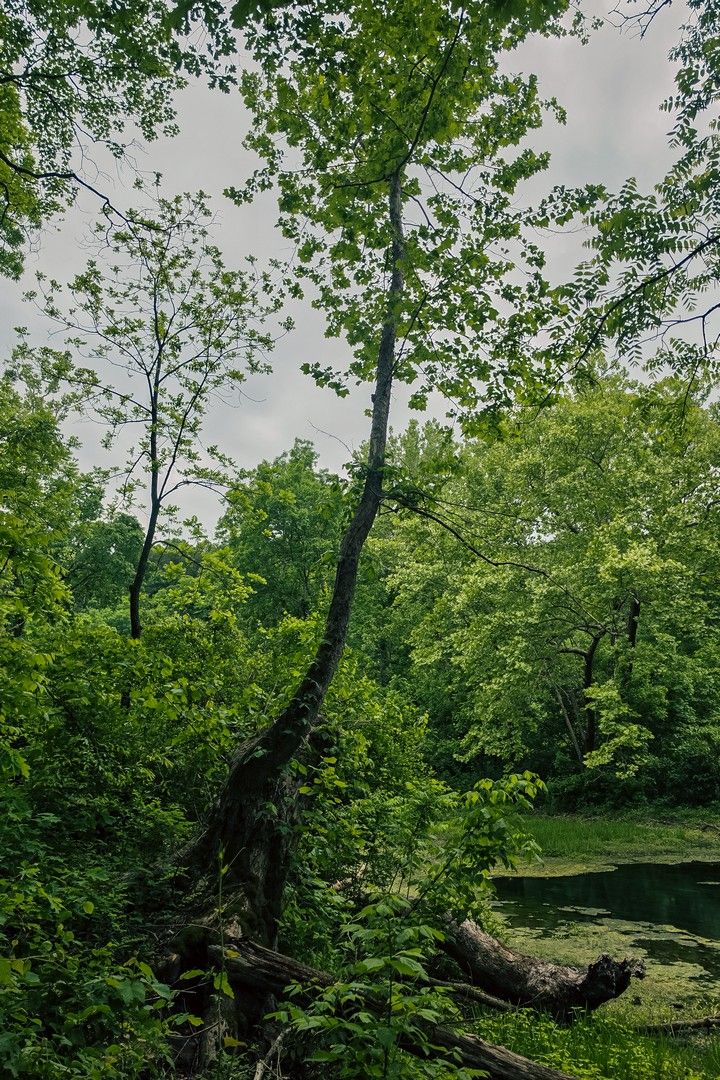
There is water everywhere at Boze. Clear, cold, blue water pushing up from somewhere hidden. You do not see the underground work. You only see the result. The spring keeps filling. Keeps moving. Keeps reflecting the sky. It does not look frantic. It does not strain to prove anything. It simply flows because that is what it was made to do.
And right there beside it is a tree that should have been finished, still finding enough life to begin again.
That is the kind of place where a person can stand for a long time without saying much.
The dog may tug at the leash. The sun may flash bright on the water. A dragonfly may land on a floating bit of green. The old trunk may sit half in shadow, half in light. And the whole scene keeps speaking whether you answer it or not.
Behold, I will do a new thing.
Not someday far off when everything is clean and easy.
Now.
Now it shall spring forth.
Not when the broken part disappears.
Not when the story becomes less complicated.
Not when you have a version of yourself that feels impressive again.
Now.
There is new life that begins while the evidence of the fall is still lying there.
That may be one of the most honest kinds of hope.
It does not demand that we deny what happened. It does not ask us to call pain a blessing or pretend the breaking was not real. It does not rush us past grief. But it also does not let grief become a grave for everything God still wants to grow.
The fallen trunk can remain part of the story without becoming the whole story.
That is important.
Because some people will only see the broken part. They will look across the spring and see a dead-looking trunk in the water. They may not notice the new growth. They may not understand that the old tree is not done. They may assume the best of it is behind it.
People do that with other people too.
They see the divorce, the failure, the loss, the breakdown, the mistake, the sickness, the grief, the season when everything fell apart. They see the trunk in the water and think they know the whole thing.
But God sees roots.
God sees what is still alive underneath.
God sees the part that can grow again, even if it grows differently this time.
And maybe differently is not a downgrade.
Maybe differently is wisdom.
Maybe differently is what happens when grace teaches you not to rebuild the same fragile tower.
Maybe differently is learning to say no where you used to say yes.
Maybe differently is resting before your body forces you to.
Maybe differently is walking away from the argument instead of trying to win it.
Maybe differently is letting people misunderstand you without handing them your peace.
Maybe differently is admitting you cannot carry what God never asked you to carry.
Maybe differently is building a life that does not require you to break in order to be loved.
That new trunk growing out of the old stump will not be an exact copy of what fell. It cannot be. It has a different path now. The light hits it differently. The old wound changed the shape of the tree. The spring, the bank, the broken trunk, the open space left behind—all of it affects how the new growth reaches.
And still, it reaches.
There is something beautiful about that.
Not polished beautiful. Not greeting-card beautiful. Real beautiful. The kind that still has mud on it. The kind with rough bark and a scar you can see from across the water. The kind that does not need to be perfect to be alive.
I think that is closer to how God works in us than we want to admit.
We want the miracle to look like reversal.
Sometimes it looks like renewal.
We want the testimony to be, “I got everything back.”
Sometimes it is, “I learned how to live again without everything I lost.”
We want God to erase the break.
Sometimes He grows something green right beside it.
At Boze Spring, the old tree is still part of the landscape. It is not shameful. It is not hidden away. It is part of what makes the place feel so honest. The spring is gorgeous, yes, but it is not untouched. It has fallen wood, mossy edges, tangled limbs, shadows, and things left behind by weather and time. Its beauty is not fragile. It can hold both clear water and broken trees.
Maybe we can too.
Maybe a life of faith is not a life where nothing ever falls.
Maybe it is a life where, when something does fall, we stay close enough to the living water to grow again.
That is the part I keep coming back to.
The tree did not fall in a desert. It fell beside the spring.
And when it was time to begin again, there was water.
There was still nourishment.
There was still a hidden source.
There was still enough life moving nearby for something new to rise.
We do not always get to choose where we fall. Some seasons knock us down in places we never expected. But we can choose where we stay rooted. We can choose whether we keep reaching toward the living God or whether we dry out trying to survive on our own strength.
Jesus never promised that nothing would break. But He did promise life in Him. Real life. Living water life. The kind that runs deeper than what people can see. The kind that can keep working underground while everything above looks ruined.
So maybe the question is not, “Can I ever be what I used to be?”
Maybe the better question is, “Lord, what are You growing now?”
That is not an easy question.
It may ask something of us.
It may ask us to stop calling old patterns loyalty.
It may ask us to stop calling fear wisdom.
It may ask us to stop calling exhaustion faithfulness.
It may ask us to quit trying the same thing over and over while praying for different fruit.
It may ask us to let the new growth be new.
But standing there at Boze Spring, looking at that old giant stretched across the water and that fresh life rising from what remained, it is hard not to believe that God knows exactly how to begin again.
Not wastefully.
Not carelessly.
Not by pretending the fall never happened.
But with patience. With water. With roots. With time.
A new thing does not always look impressive at first. It may look small compared to what fell. It may look uneven. It may look like it is coming out of the wrong place. People may not understand it. You may not understand it either.
But new life rarely asks permission before it starts.
It simply springs forth.
And maybe one day, years from now, someone else will stand at that same spring and see that new trunk grown tall. Maybe they will not know the whole story. Maybe they will not realize they are looking at a tree that refused to quit. Maybe eagles will perch there again, on branches that only exist because the tree learned how to grow a different way.
I like thinking about that.
I like thinking that what looks like the end from one side of the spring may look like the beginning from another.
I like thinking that God can make something sturdy out of what survived.
I like thinking that the broken place does not have to be wasted.
And I love that He does not say, “Behold, I will do a familiar thing.”
He says, “Behold, I will do a new thing.”
So here is to the trees that fell and kept growing.
Here is to the people who are not who they used to be, but are still becoming.
Here is to the roots nobody clapped for.
Here is to the fresh start that does not look like the old life, but still carries the hand of God all over it.
And here is to the quiet mercy of Boze Spring, where the water is clear, the old trunk still rests where it fell, and a new tree is already reaching for the light.