Some moments arrive quiet, but heavy. Like the hush after a storm. Like the silence that follows a long sigh when your spirit has had enough.
That was the kind of day it had been. A little too much noise, a little too much people-ing, and a lot too much disappointment. You try to be kind, try to show up, try to offer grace—but there are days when the weight of others’ words, or lack thereof, presses down harder than you thought it would. People can drain you dry.
And on that particular day, I wanted nothing more than to disappear. Not forever—just for a little while. Just long enough to find peace again.
So I did what I always do when my soul feels scraped thin: I went outside.
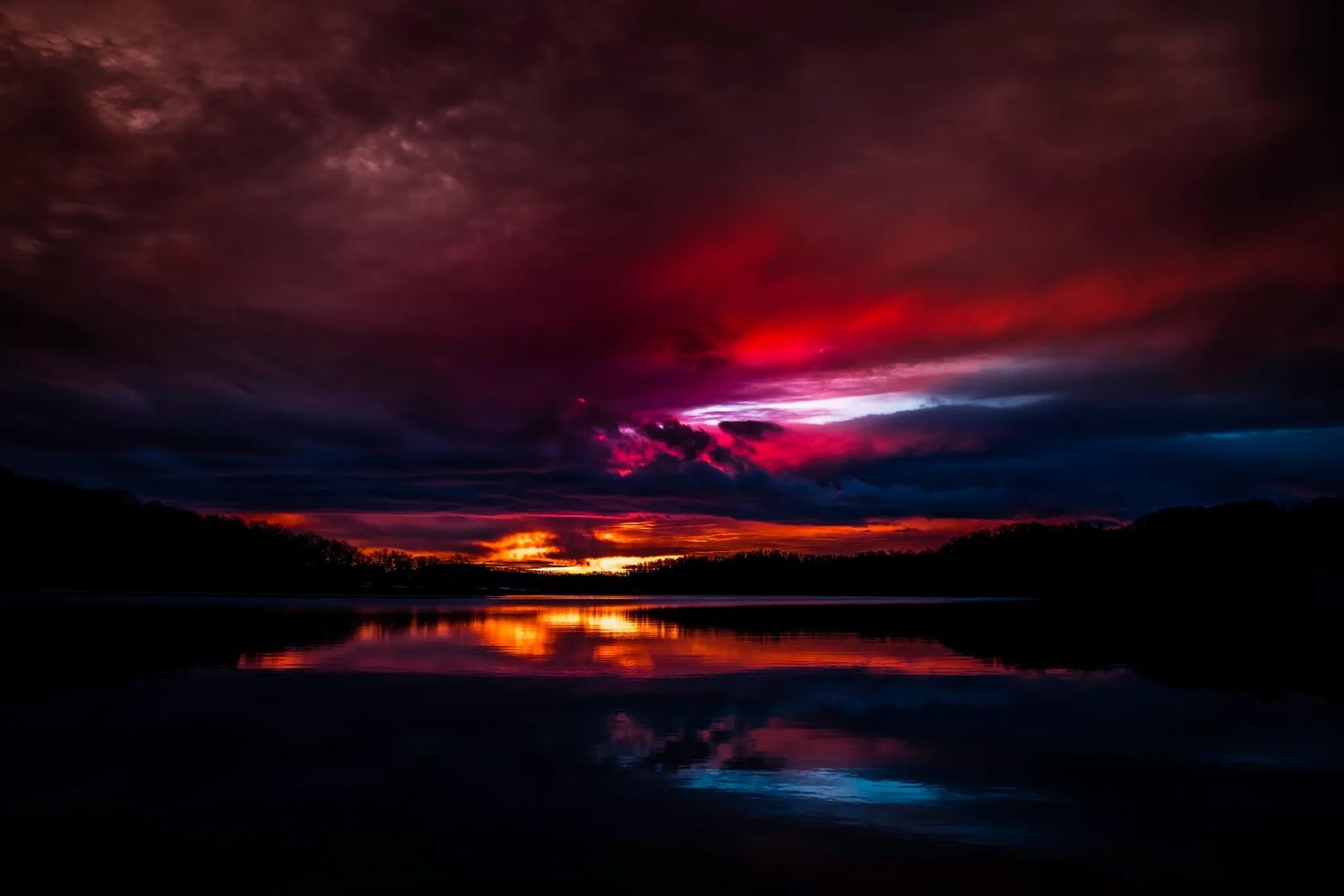
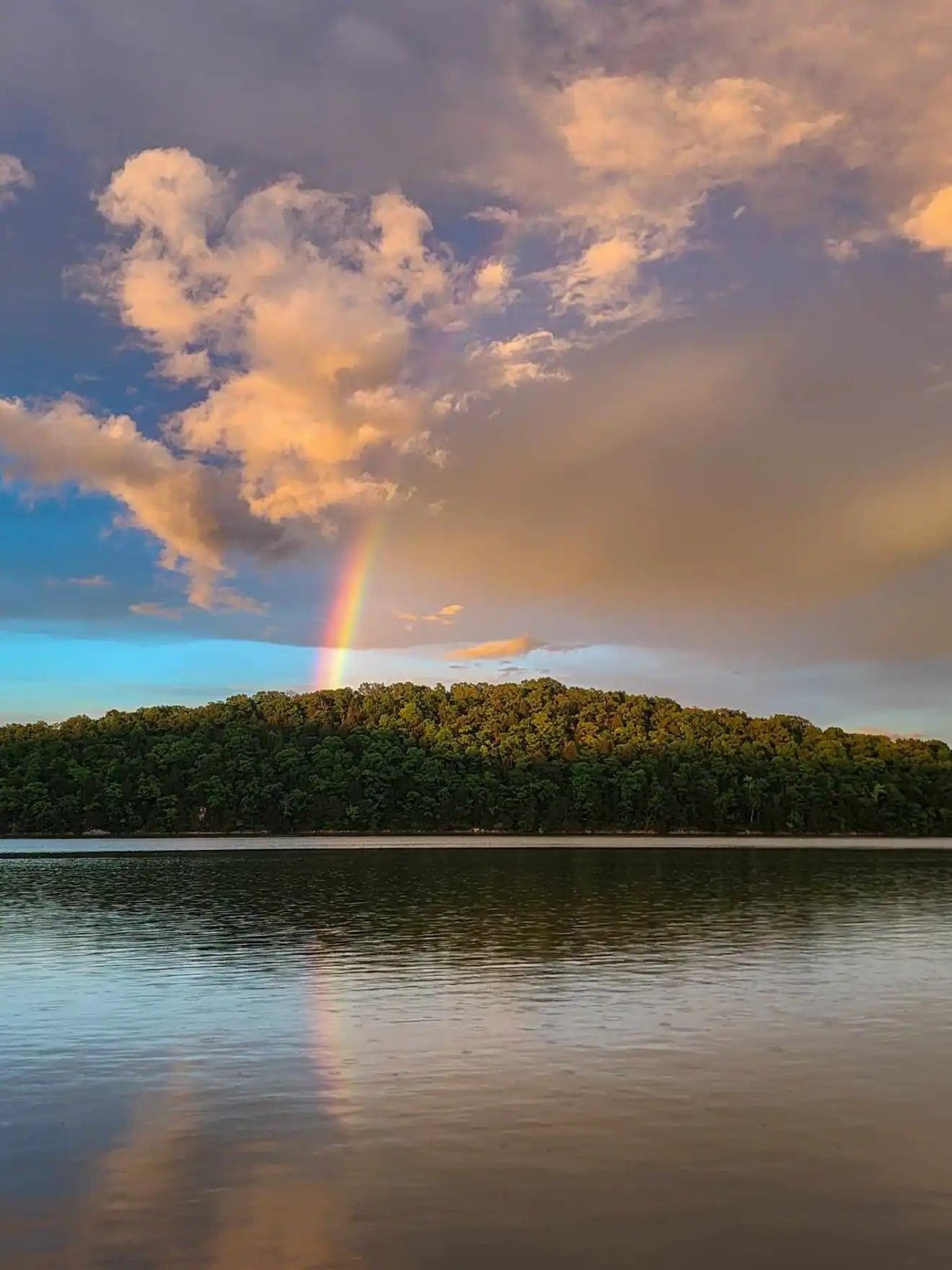
It had rained earlier. The kind of spring storm that rolls in fast, throws its weight around, and then vanishes into humidity and hush. The lake was glassy again, the clouds were breaking, and I walked down to the dock with my camera, not expecting much. Just needing the air. The stillness.
And then I saw it.
A rainbow.
Not a full arc. Not a blinding one. But a soft sweep of color nestled into the sky above the water, peeking out just enough to be noticed.
I almost missed it.
And maybe that’s the point.
God’s Promise in a World of Disappointment
There’s something sacred about a rainbow. Not just beautiful—sacred. Because it’s not just light and mist and science. It’s covenant.
Genesis 9:13–16 tells us:
“I have set my rainbow in the clouds, and it will be the sign of the covenant between me and the earth… Never again will the waters become a flood to destroy all life.”
That rainbow wasn’t placed there for decoration. It was God’s visible, lasting promise. A reminder that even in the aftermath of devastation, mercy wins.
And it wasn’t a promise to perfect people. It was a promise to the only people left, people who had survived something unimaginable. It was a covenant of compassion.
I think sometimes we forget that the rainbow came after heartbreak. After judgment. After grief.
Just like the ones we see now—after the storm.
When Creation Speaks Louder Than People
That day, sitting on the dock, I didn’t want another conversation. I didn’t want advice. I didn’t want anyone to ask me how I was or tell me how I should be.
I wanted quiet. I wanted real.
I found both in Psalm 104:
“How many are your works, Lord! In wisdom you made them all; the earth is full of your creatures… The glory of the Lord endures forever; may the Lord rejoice in His works.” (vv. 24, 31)
There is something reverent in the way the earth responds to God.
The birds still sing after storms. The water still reflects light even after it’s been thrashed by wind. The rainbow still shows up even when no one is watching.
Creation doesn’t second-guess its worship. It doesn’t get distracted by comparison or pride. It doesn’t get hurt by gossip or left out of group chats.
People will break your heart. Nature will help you remember how to hold it again.
The Ache of Isolation—Even God Knows That Feeling
Sometimes I feel guilty for wanting to be alone. Like it’s weakness. Or selfishness. Or just plain giving up.
But then I read Genesis 6:5–6:
“The Lord saw how great the wickedness of the human race had become… and His heart was deeply troubled.”
God grieved.
Let that sink in.
The Creator of all things looked upon what people had become and felt heartbreak.
So no, it’s not wrong to feel the ache. To want to retreat from a world that feels too loud, too cruel, too fake. Even God stepped back, sighed deeply, and wiped the slate clean.
But then—He promised never to do that again.
Which tells me something important:
God doesn’t want to erase us. He wants to redeem us. And He wants to meet us in our grief, not rush us past it.
When the Joy is Sucked Out of the Day
If you’ve ever had a day where everyone seems to want something from you—but no one stops to ask how your heart is—you know the kind of fatigue I’m talking about. When you’re tired of being the strong one, the peacemaker, the helper, the forgiver.
People can take until there’s nothing left.
And sometimes the most godly thing you can do is step away. Not to sulk. But to remember.
Remember what joy feels like. Remember what peace sounds like. Remember what it means to be loved—not for what you do, but for who you are.
That’s what creation does for me.
It reminds me that I am not just a product of other people’s expectations. I am not what they think of me. I am not the weight of their wounds.
I am His.
And He still paints rainbows.
Finding the Joy Again
The rainbow that day didn’t fix everything. The people who had drained me didn’t magically apologize. The circumstances didn’t suddenly get easier.
But my heart did.
Because when you remember who God is, you remember who you are.
“He makes springs pour water into the ravines; it flows between the mountains. They give water to all the beasts of the field…” — Psalm 104:10–11
If He cares that deeply for the animals, the fields, the winds and waters—He cares for you.
And sometimes He uses beauty to whisper it.
Sometimes He lets the sky open in color not just to keep a promise, but to hold your attention long enough to let the hurt settle, and the healing begin.
Closing Thoughts: The Rainbow Still Stands
We live in a world that often makes us want to run and hide. But the danger of isolation is that it becomes a cave instead of a sanctuary.
The dock that day was a sanctuary.
It was where I remembered the promises that never change, even when people do.
Where I remembered that God never asked me to carry more than I could handle without Him.
Where I remembered that rainbows don’t show up unless there’s been a storm—but when they do, they are worth waiting for.
And so is your joy.
It may take retreat. It will require reflection. But the promise still stands.
And if you look close, it just might be peeking out over the lake.