I planted wildflowers in our field this year, and I do not think I expected them to make me as happy as they did.
It was such a simple thing. Seeds in the ground. A little hope. A lot of waiting. Our field is not manicured or tidy. It is not one of those polished garden spaces with neat rows, perfect borders, and everything looking like someone with a plan and a lot more energy than me had been tending it every day. It is overgrown in places. Weedy. Wild. Unmowed. A little unruly around the edges.
And then the flowers came.
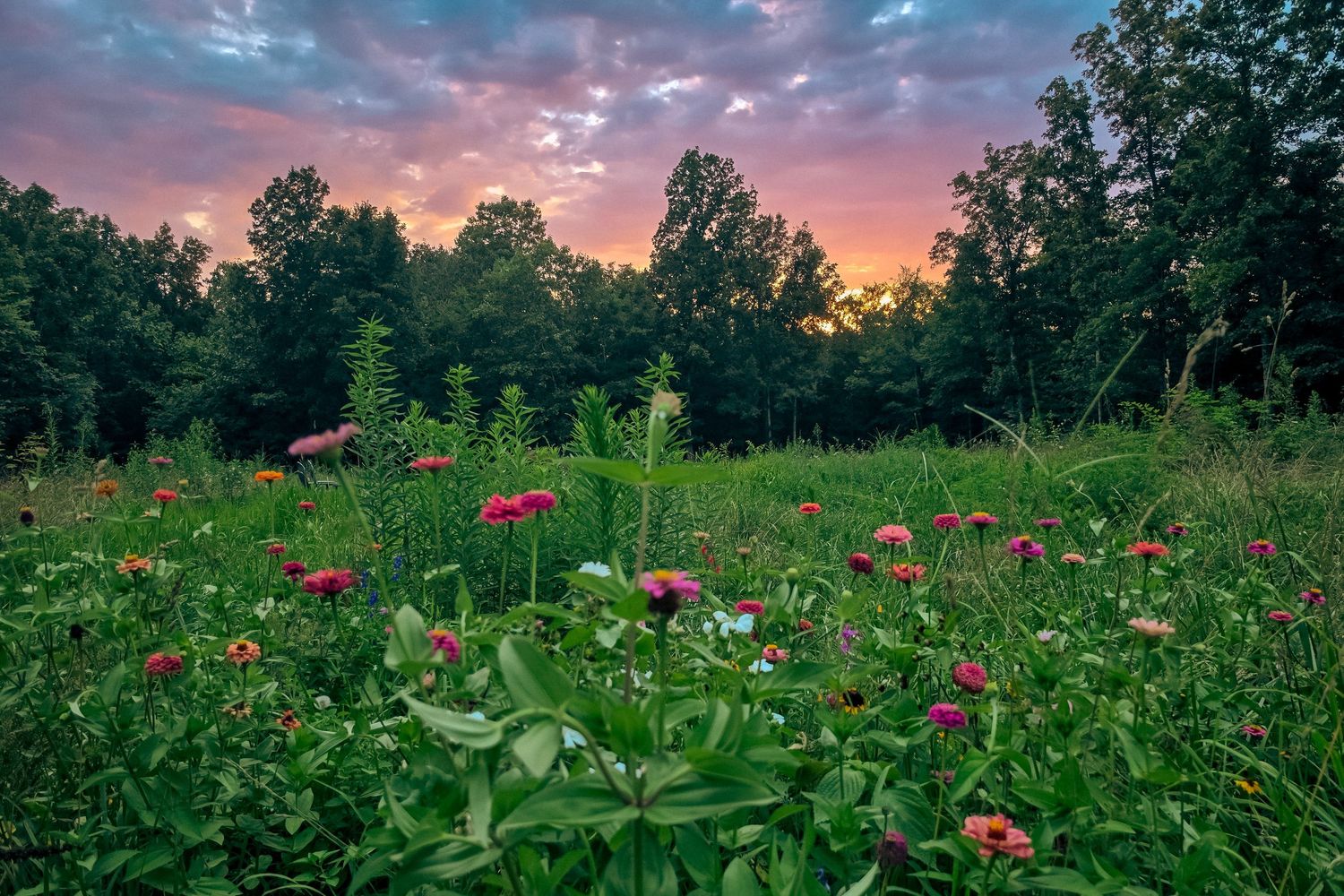
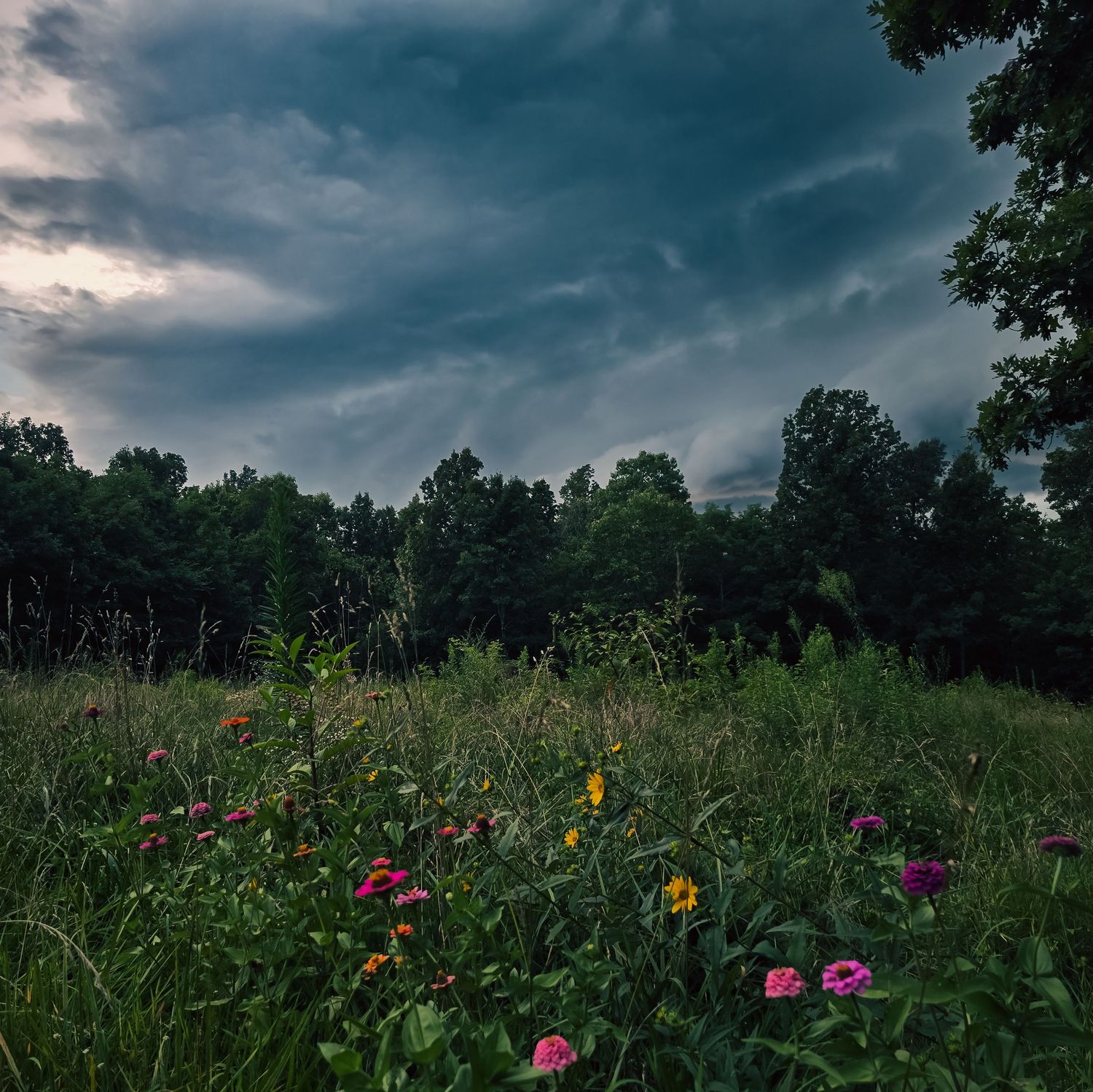
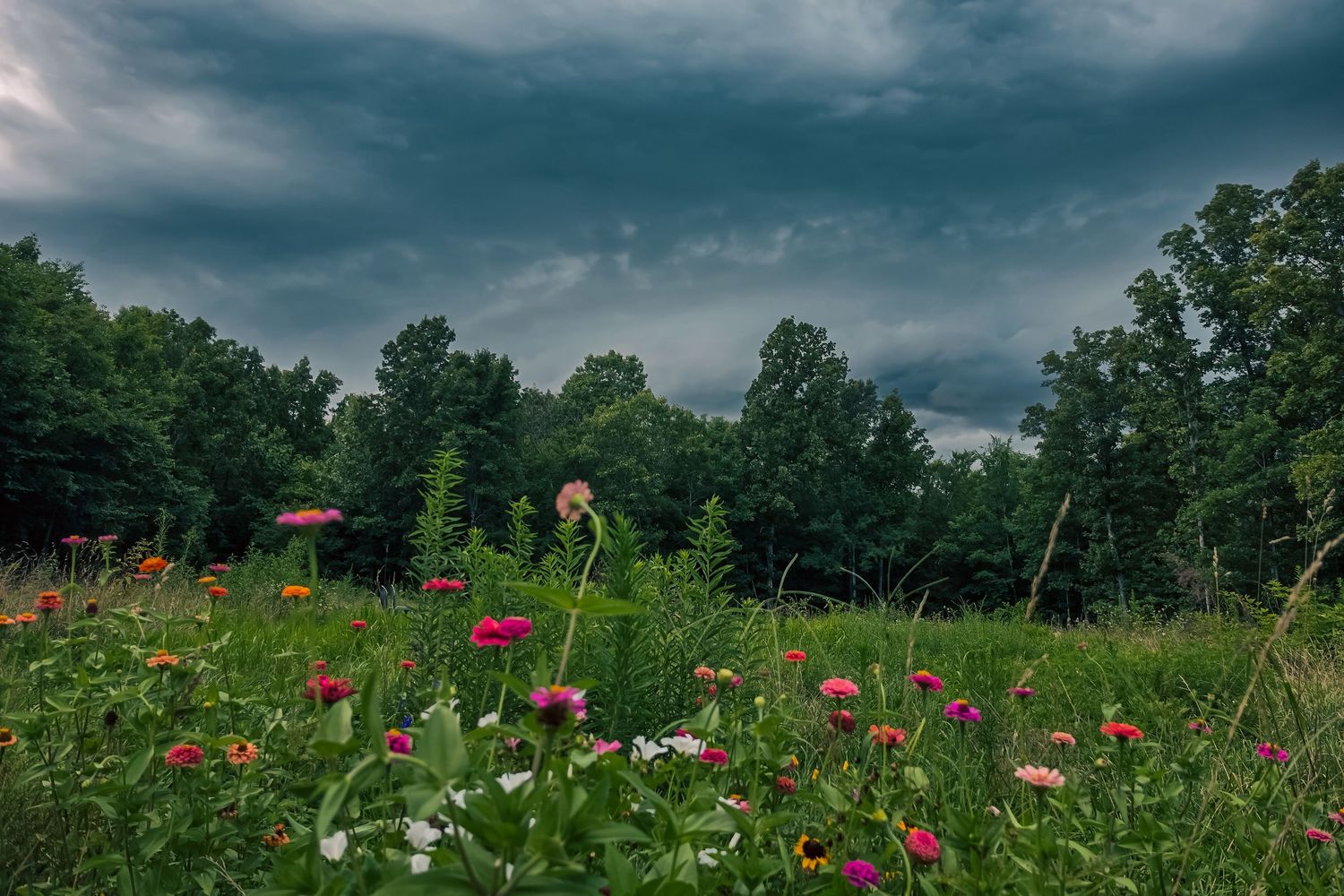
Bright little bursts of color scattered through all that green. Pink, orange, yellow, white, red — all of them standing there like they had every right to be there. At sunset, they caught the last light and looked almost unreal. At dawn, they seemed soft and hopeful. But honestly, I think I loved them most on the cloudy days, when the sky was heavy and the colors popped even harder against the gloom.
They did not exactly “fit” with the field.
And maybe that is why I loved them so much.
There was something about their presence in all that overgrowth that felt familiar to me. They were not planted in a perfect place, and they were not surrounded by perfect things, but they bloomed anyway. They did not wait for the whole field to become respectable before they showed up in color. They did not apologize for being bright in a place that looked a little messy.
I think I understand that more than I wish I did.
I have spent much of my life feeling like a misfit. Too tarnished, too blunt, too neurodivergent, too untraditional, too shaped by recovery, too marked by abuse, too honest in ways that make people uncomfortable. Too much for some spaces. Not enough for others. Too churchy for the world, sometimes. Too rough around the edges for parts of the church crowd.
That is a strange place to live.
I do not say that because I want to fit into the world. I do not. I know we are not called to blend into everything around us just to make people comfortable. But it would be nice, sometimes, to find a few more people who understand. A few more people who do not need you to shrink, soften, polish, or explain yourself to death before they decide you are worth making room for.
Some church spaces make wounded people feel unwelcome.
That is a hard sentence, but I think it is true.
Not every church. Not every Christian. Not every room. But enough of them. Enough that people who are recovering, neurodivergent, blunt, scarred, questioning, abused, awkward, poor, divorced, addicted, anxious, strange, or simply not very good at performing the expected version of “church person” learn to stand near the edges. They learn to stay quiet. They learn to wonder if there is room for them, or if their testimony is only welcome after it has been cleaned up enough not to make anybody nervous.
But Jesus did not call us to be decorative.
He did not call us to be liked by everyone.
He said this:
“Ye are the salt of the earth: but if the salt have lost his savour, wherewith shall it be salted? It is thenceforth good for nothing, but to be cast out, and to be trodden under foot of men.”
— Matthew 5:13
Salt is not honey.
That thought has been sitting with me lately.
Honey is sweet. People like honey. Honey is easy to enjoy. Salt is different. Salt preserves. Salt adds flavor. Salt can sting when it touches a wound. Salt was never asked to be everyone’s favorite thing by itself. It has a purpose, and that purpose is not always the same as being pleasant.
I think some of us have worn ourselves out trying to be honey when Jesus called us to be salt.
We keep trying to become more palatable, more agreeable, more acceptable, more likable, more polished, more like the kind of person who can walk into any room and instantly make sense to everyone there. But maybe our job was never to be easy for everyone to consume. Maybe our job was to stay faithful, stay useful, stay honest, and stop losing the very thing God put in us to help prevent rot.
That does not mean being harsh for the sake of it. Salt can be overused. Truth without love can become cruelty wearing church clothes. But love without truth can become something weak and spoiled too. We are called to be salt, not because we are better than anyone else, but because the world is decaying and Jesus told His people to have a preserving presence in it.
Then He says this:
“Ye are the light of the world. A city that is set on an hill cannot be hid.
Neither do men light a candle, and put it under a bushel, but on a candlestick; and it giveth light unto all that are in the house.
Let your light so shine before men, that they may see your good works, and glorify your Father which is in heaven.”
— Matthew 5:14–16
That is the part I cannot seem to get away from.
I have found peace at home. Real peace. I love our quiet. I love our woods and field and the strange little life God is helping us build here. I do not feel like I am hiding when I am home. I feel settled. Rooted. Safe in a way that took me a long time to find.
But lately, I keep feeling that gentle pressure from God that my blessings are not only for me.
The peace He has given me is not meant to become a locked room. The healing is not meant to be hoarded. The lessons were not only for my own survival. The beauty He lets me see, the words He gives me, the photos, the honesty, the strange way I see the world — maybe all of it is meant to be shared, even if sharing means being misunderstood sometimes.
And that is where I think a lot of misfits get stuck.
We finally find a place where we can breathe, and we are tempted to stay there forever. We find peace, and we want to guard it. We get tired of being too much, too weird, too blunt, too sensitive, too quiet, too intense, too complicated. We get tired of feeling like wildflowers in a field where everyone else wanted grass.
So we hide.
But if all the misfits hide, how are we supposed to find each other?
How is the recovering person supposed to know there is someone else who understands?
How is the neurodivergent believer supposed to know they are not the only one who feels out of step?
How is the wounded person supposed to know there is room at the table if everyone who has been wounded keeps pretending they have never bled?
How is the one standing on the edge of the church supposed to find hope if the rest of us keep our light tucked safely under a basket?
Romans 12:2 says:
“And be not conformed to this world: but be ye transformed by the renewing of your mind, that ye may prove what is that good, and acceptable, and perfect, will of God.”
Not conformed.
That is not always comfortable.
Being transformed means we are not going to fit everywhere we used to fit. It also means we may not fit neatly into every human expectation of what Christian life is supposed to look like. God may renew our minds in ways that make us harder to categorize. He may pull us away from old habits, old circles, old fears, and old ways of performing. He may make us more honest, more tender, more steady, more willing to speak when it would be easier to stay quiet.
Transformation does not always look tidy from the outside.
Sometimes it looks like a wildflower in a weedy field.
Bright, awkward, beautiful, and slightly out of place.
But maybe out of place is not always wrong.
Maybe sometimes “out of place” is exactly where God planted you.
I look at these flowers and think about how little it took to change the whole feeling of that field. The weeds were still there. The grass was still tall. The field was still unkempt and wild. But the flowers changed how I saw it. They did not fix every messy part. They did not turn the field into a formal garden. They simply bloomed where they were, and suddenly the whole place felt more alive.
Maybe that is enough for us too.
Maybe we are not called to make every space perfect before we show up in it. Maybe we are not called to wait until we feel fully healed, fully polished, fully accepted, fully brave, or fully understood. Maybe we are called to offer what we have been given, right in the middle of the weeds.
1 Peter 4:10 says:
“As every man hath received the gift, even so minister the same one to another, as good stewards of the manifold grace of God.”
That verse reminds me that whatever gift God gives us is not only personal property. It is stewardship.
If He gives comfort, we steward it.
If He gives wisdom, we steward it.
If He gives healing, we steward it.
If He gives words, photos, hospitality, patience, discernment, testimony, creativity, mercy, or the ability to sit with someone in their mess without flinching, we steward it.
And stewardship means we cannot bury it forever just because people may not understand the package it comes in.
I think that is what God has been working on in me lately. Not dragging me out of peace, but teaching me that peace can move. Peace can speak. Peace can serve. Peace can invite. Peace can open the door. Peace can still be peace, even when it is shared.
The wildflowers did not make the field less wild.
They made the wildness beautiful.
Maybe that is what God does with misfits.
He does not always make us blend in better. Sometimes He teaches us to bloom without needing everyone to approve of the color. He lets us remain a little unusual, a little hard to categorize, a little rough around the edges, because there are other people out there who will recognize something in us that they cannot recognize in a polished performance.
So this is for the people who feel too tarnished for the church crowd and too changed for the world.
The ones who love Jesus but do not always know where to sit.
The ones who have survived things that made them hard to explain.
The ones who are blunt, quiet, awkward, intense, sensitive, recovering, scarred, neurodivergent, or just plain tired of trying to be someone else.
You do not have to become honey to be useful.
Be salt.
You do not have to hide your light because someone might not like the way it shines.
Let it shine anyway.
You do not have to wait for the field to look perfect before you bloom.
Bloom in the weeds.
Because maybe someone else is standing at the edge of their own overgrown place, praying for proof that they are not the only one.
And maybe God planted you there so they could find you.